
- Home
- Dean Koontz
Odd Thomas Page 2
Odd Thomas Read online
Page 2
For half a minute, the only movement was that of a hawk gliding high above, glimpsed between laurel branches.
The hawk and I were hunters this morning.
Penny Kallisto must have sensed my fear. She took my right hand in her left.
I was grateful for this kindness. Her grip proved firm, and her hand did not feel cold. I drew courage from her strong spirit.
Because the car was idling in gear, rolling at just a few miles per hour, I didn’t hear anything until it turned the corner. When I recognized the vehicle, I knew a sadness equal to my fear.
This 1968 Pontiac Firebird 400 had been restored with loving care. The two-door, midnight-blue convertible appeared to glide toward us with all tires a fraction of an inch off the pavement, shimmering like a mirage in the morning heat.
Harlo Landerson and I had been in the same high-school class. During his junior and senior years, Harlo rebuilt this car from the axles up, until it looked as cherry as it had in the autumn of ’67, when it had first stood on a showroom floor.
Self-effacing, somewhat shy, Harlo had not labored on the car with the hope either that it would be a babe magnet or that those who had thought of him as tepid would suddenly think he was cool enough to freeze the mercury in a thermometer. He’d had no social ambitions. He had suffered no illusions about his chances of ever rising above the lower ranks of the high-school caste system.
With a 335-horsepower V-8 engine, the Firebird could sprint from zero to sixty miles per hour in under eight seconds. Yet Harlo wasn’t a street racer; he took no special pride in having wheels of fury.
He devoted much time, labor, and money to the Firebird because the beauty of its design and function enchanted him. This was a labor of the heart, a passion almost spiritual in its purity and intensity.
I sometimes thought the Pontiac figured so large in Harlo’s life because he had no one to whom he could give the love that he lavished on the car. His mom died when he was six. His dad was a mean drunk.
A car can’t return the love you give it. But if you’re lonely enough, maybe the sparkle of the chrome, the luster of the paint, and the purr of the engine can be mistaken for affection.
Harlo and I hadn’t been buddies, just friendly. I liked the guy. He was quiet, but quiet was better than the boast and bluster with which many kids jockeyed for social position in high school.
With Penny Kallisto still at my side, I raised my left hand and waved at Harlo.
Since high school, he’d worked hard. Nine to five, he unloaded trucks at Super Food and moved stock from storeroom to shelves.
Before that, beginning at 4:00 A.M., he dropped hundreds of newspapers at homes on the east side of Pico Mundo. Once each week, he also delivered to every house a plastic bag full of advertising flyers and discount-coupon books.
This morning, he distributed only newspapers, tossing them with a snap of the wrist, as though they were boomerangs. Each folded and bagged copy of the Tuesday edition of the Maravilla County Times spun through the air and landed with a soft thwop on a driveway or a front walk, precisely where the subscriber preferred to have it.
Harlo was working the far side of the street. When he reached the house opposite me, he braked the coasting Pontiac to a stop.
Penny and I crossed to the car, and Harlo said, “Good mornin’, Odd. How’re you this fine day?”
“Bleak,” I replied. “Sad. Confused.”
He frowned with concern. “What’s wrong? Anything I can do?”
“Something you’ve already done,” I said.
Letting go of Penny’s hand, I leaned into the Firebird from the passenger’s side, switched off the engine, and plucked the key from the ignition.
Startled, Harlo grabbed for the keys but missed. “Hey, Odd, no foolin’ around, okay? I have a tight schedule.”
I never heard Penny’s voice, but in the rich yet silent language of the soul, she must have spoken to me.
What I said to Harlo Landerson was the essence of what the girl revealed: “You have her blood in your pocket.”
An innocent man would have been baffled by my statement. Harlo stared at me, his eyes suddenly owlish not with wisdom but with fear.
“On that night,” I said, “you took with you three small squares of white felt.”
One hand still on the wheel, Harlo looked away from me, through the windshield, as if willing the Pontiac to move.
“After using the girl, you collected some of her virgin blood with the squares of felt.”
Harlo shivered. His face flushed red, perhaps with shame.
Anguish thickened my voice. “They dried stiff and dark, brittle like crackers.”
His shivers swelled into violent tremors.
“You carry one of them with you at all times.” My voice shook with emotion. “You like to smell it. Oh, God, Harlo. Sometimes you put it between your teeth. And bite on it.”
He threw open the driver’s door and fled.
I’m not the law. I’m not vigilante justice. I’m not vengeance personified. I don’t really know what I am, or why.
In moments like these, however, I can’t restrain myself from action. A kind of madness comes over me, and I can no more turn away from what must be done than I can wish this fallen world back into a state of grace.
As Harlo burst from the Pontiac, I looked down at Penny Kallisto and saw the ligature marks on her throat, which had not been visible when she had first appeared to me. The depth to which the garroting cloth had scored her flesh revealed the singular fury with which he had strangled her to death.
Pity tore at me, and I went after Harlo Landerson, for whom I had no pity whatsoever.
TWO
BLACKTOP TO CONCRETE, CONCRETE TO GRASS, alongside the house that lay across the street from Mrs. Sanchez’s place, through the rear yard, to a wrought-iron fence and over, then across a narrow alleyway, up a slumpstone wall, Harlo Landerson ran and clambered and flung himself.
I wondered where he might be going. He couldn’t outrun either me or justice, and he certainly couldn’t outrun who he was.
Beyond the slumpstone wall lay a backyard, a swimming pool. Dappled with morning light and tree shadows, the water glimmered in shades of blue from sapphire to turquoise, as might a trove of jewels left by long-dead pirates who had sailed a sea since vanished.
On the farther side of the pool, behind a sliding glass door, a young woman stood in pajamas, holding a mug of whatever brew gave her the courage to face the day.
When he spotted this startled observer, Harlo changed directions toward her. Maybe he thought he needed a shield, a hostage. Whatever, he wasn’t looking for coffee.
I closed on him, snared his shirt, hooked him off his feet. The two of us plunged into the deep end of the pool.
Having banked a summer’s worth of desert heat, the water wasn’t cold. Thousands of bubbles like shimmering showers of silver coins flipped across my eyes, rang against my ears.
Thrashing, we touched bottom, and on the way up, he kicked, he flailed. With elbow or knee, or foot, he struck my throat.
Although the impeding water robbed the blow of most of its force, I gasped, swallowed, choked on the taste of chlorine flavored with tanning oil. Losing my grip on Harlo, I tumbled in slow-mo through undulant curtains of green light, blue shadow, and broke the surface into spangles of sunshine.
I was in the middle of the pool, and Harlo was at the edge. He grabbed the coping and jacked himself onto the concrete deck.
Coughing, venting atomized water from both nostrils, I splashed noisily after him. As a swimmer, I have less potential for Olympic competition than for drowning.
On a particularly dispiriting night when I was sixteen, I found myself chained to a pair of dead men and dumped off a boat in Malo Suerte Lake. Ever since then, I’ve had an aversion to aquatic sports.
That man-made lake lies beyond the city limits of Pico Mundo. Malo Suerte means “bad luck.”
Constructed during the Great Depression as a proj
ect of the Works Progress Administration, the lake originally had been named after an obscure politician. Although they have a thousand stories about its treacherous waters, nobody around these parts can quite pin down when or why the place was officially renamed Malo Suerte.
All records relating to the lake burned in the courthouse fire of 1954, when a man named Mel Gibson protested the seizure of his property for nonpayment of taxes. Mr. Gibson’s protest took the form of self-immolation.
He wasn’t related to the Australian actor with the same name who would decades later become a movie star. Indeed, by all reports, he was neither talented nor physically attractive.
Now, because I hadn’t been burdened on this occasion by a pair of men too dead to swim for themselves, I reached the edge of the pool in a few swift strokes. I levered myself out of the water.
Having arrived at the sliding door, Harlo Landerson found it locked.
The pajamaed woman had disappeared.
As I scrambled to my feet and started to move, Harlo backed away from the door far enough to get momentum. Then he ran at it, leading with his left shoulder, his head tucked down.
I winced in expectation of gouting blood, severed limbs, a head guillotined by a blade of glass.
Of course the safety pane shattered into cascades of tiny, gummy pieces. Harlo crashed into the house with all his limbs intact and his head still attached to his neck.
Glass crunched and clinked under my shoes when I entered in his wake. I smelled something burning.
We were in a family room. All the furniture was oriented toward a big-screen TV as large as a pair of refrigerators.
The gigantic head of the female host of the Today show was terrifying in such magnified detail. In these dimensions, her perky smile had the warmth of a barracuda’s grin. Her twinkly eyes, here the size of lemons, seemed to glitter maniacally.
In this open floor plan, the family room flowed into the kitchen with only a breakfast bar intervening.
The woman had chosen to make a stand in the kitchen. She gripped a telephone in one hand and a butcher knife in the other.
Harlo stood at the threshold between rooms, trying to decide if a twentysomething housewife in too-cute, sailor-suit pajamas would really have the nerve to gut him alive.
She brandished the knife as she shouted into the phone. “He’s inside, he’s right here!”
Past her, on a far counter, smoke poured from a toaster. Some kind of pop-up pastry had failed to pop. It smelled like strawberries and smoldering rubber. The lady was having a bad morning.
Harlo threw a bar stool at me and ran out of the family room, toward the front of the house.
Ducking the stool, I said, “Ma’am, I’m sorry about the mess,” and I went looking for Penny’s killer.
Behind me, the woman screamed, “Stevie, lock your door! Stevie, lock your door!”
By the time I reached the foot of the open stairs in the foyer, Harlo had climbed to the landing.
I saw why he had been drawn upward instead of fleeing the house: At the second floor stood a wide-eyed little boy, about five years old, wearing only undershorts. Holding a blue teddy bear by one of its feet, the kid looked as vulnerable as a puppy stranded in the middle of a busy freeway.
Prime hostage material.
“Stevie, lock your door!”
Dropping the blue bear, the kid bolted for his room.
Harlo charged up the second flight of stairs.
Sneezing out the tickle of chlorine and the tang of burning strawberry jam, dripping, squishing, I ascended with somewhat less heroic flair than John Wayne in Sands of Iwo Jima.
I was more scared than my quarry because I had something to lose, not least of all Stormy Llewellyn and our future together that the fortune-telling machine had seemed to promise. If I encountered a husband with a handgun, he’d shoot me as unhesitatingly as he would Harlo.
Overhead, a door slammed hard. Stevie had done as his mother instructed.
If he’d had a pot of boiling lead, in the tradition of Quasimodo, Harlo Landerson would have poured it on me. Instead came a sideboard that evidently had stood in the second-floor hall, opposite the head of the stairs.
Surprised to discover that I had the agility and the balance of a monkey, albeit a wet monkey, I scrambled off the stairs, onto the railing. The deadfall rocked past step by step, drawers gaping open and snapping shut repeatedly, as if the furniture were possessed by the spirit of a crocodile.
Off the railing, up the stairs, I reached the second-floor hall as Harlo began to break down the kid’s bedroom door.
Aware that I was coming, he kicked harder. Wood splintered with a dry crack, and the door flew inward.
Harlo flew with it, as if he’d been sucked out of the hall by an energy vortex.
Rushing across the threshold, pushing aside the rebounding door, I saw the boy trying to wriggle under the bed. Harlo had seized him by the left foot.
I snatched a smiling panda-bear lamp off the red nightstand and smashed it over Harlo’s head. A ceramic carnage of perky black ears, fractured white face, black paws, and chunks of white belly exploded across the room.
In a world where biological systems and the laws of physics functioned with the absolute dependability that scientists claim for them, Harlo would have dropped stone-cold unconscious as surely as the lamp shattered. Unfortunately, this isn’t such a world.
As love empowers some frantic mothers to find the superhuman strength to lift overturned cars to free their trapped children, so depravity gave Harlo the will to endure a panda pounding without significant effect. He let go of Stevie and rounded on me.
Although his eyes lacked elliptical pupils, they reminded me of the eyes of a snake, keen with venomous intent, and though his bared teeth included no hooked or dramatically elongated canines, the rage of a rabid jackal gleamed in his silent snarl.
This wasn’t the person whom I had known in high school so few years ago, not the shy kid who found magic and meaning in the patient restoration of a Pontiac Firebird.
Here was a diseased and twisted bramble of a soul, thorny and cankerous, which perhaps until recently had been imprisoned in a deep turning of Harlo’s mental labyrinth. It had broken down the bars of its cell and climbed up through the castle keep, deposing the man who had been Harlo; and now it ruled.
Released, Stevie squirmed all the way under his bed, but no bed offered shelter to me, and I had no blankets to pull over my head.
I can’t pretend that I remember the next minute with clarity. We struck at each other when we saw an opening. We grabbed anything that might serve as a weapon, swung it, flung it. A flurry of blows staggered both of us into a clinch, and I felt his hot breath on my face, a spray of spittle, and heard his teeth snapping, snapping at my right ear, as panic pressed upon him the tactics of a beast.
I broke the clinch, shoved him away with an elbow under the chin and with a knee that missed the crotch for which it was intended.
Sirens arose in the distance just as Stevie’s mom appeared at the open door, butcher knife glinting and ready: two cavalries, one in pajamas, the other in the blue-and-black uniform of the Pico Mundo Police Department.
Harlo couldn’t get past both me and the armed woman. He couldn’t reach Stevie, his longed-for shield, under the bed. If he threw open a window and climbed onto the front-porch roof, he would be fleeing directly into the arms of the arriving cops.
As the sirens swelled louder, nearer, Harlo backed into a corner where he stood gasping, shuddering. Wringing his hands, his face gray with anguish, he looked at the floor, the walls, the ceiling, not in the manner of a trapped man assessing the dimensions of his cage, but with bewilderment, as though he could not recall how he had come to be in this place and predicament.
Unlike the beasts of the wild, the many cruel varieties of human monsters, when at last cornered, seldom fight with greater ferocity. Instead, they reveal the cowardice at the core of their brutality.
Harlo’s wringing h
ands twisted free of each other and covered his face. Through the chinks in that ten-fingered armor, I could see his eyes twitching with bright terror.
Back jammed into the corner, he slid down the junction of walls and sat on the floor with his legs splayed in front of him, hiding behind his hands as though they were a mask of invisibility that would allow him to escape the attention of justice.
The sirens reached a peak of volume half a block away, and then subsided from squeal to growl to waning groan in front of the house.
The day had dawned less than an hour ago, and I had spent every minute of the morning living up to my name.
THREE
THE DEAD DON’T TALK. I DON’T KNOW WHY.
Harlo Landerson had been taken away by the authorities. In his wallet they had found two Polaroids of Penny Kallisto. In the first, she was naked and alive. In the second, she was dead.
Stevie was downstairs, in his mother’s arms.
Wyatt Porter, chief of the Pico Mundo Police Department, had asked me to wait in Stevie’s room. I sat on the edge of the boy’s unmade bed.
I had not been alone long when Penny Kallisto walked through a wall and sat beside me. The ligature marks were gone from her neck. She looked as though she had never been strangled, had never died.
As before, she remained mute.
I tend to believe in the traditional architecture of life and the afterlife. This world is a journey of discovery and purification. The next world consists of two destinations: One is a palace for the spirit and an endless kingdom of wonder, while the other is cold and dark and unthinkable.
Call me simple-minded. Others do.
Stormy Llewellyn, a woman of unconventional views, believes instead that our passage through this world is intended to toughen us for the next life. She says that our honesty, integrity, courage, and determined resistance to evil are evaluated at the end of our days here, and that if we come up to muster, we will be conscripted into an army of souls engaged in some great mission in the next world. Those who fail the test simply cease to exist.
 Breathless
 Lightning
 The Taking
 The Door to December
 Odd Thomas
 Midnight
 Whispers
 Odd Interlude #2
 The Mask
 Watchers
 By the Light of the Moon
 Night Chills
 Brother Odd
 False Memory
 The Darkest Evening of the Year
 Life Expectancy
 The Good Guy
 Hideaway
 Innocence
 Your Heart Belongs to Me
 Forever Odd
 Intensity
 Saint Odd
 Dragon Tears
 The Husband
 Final Hour
 Demon Seed
 City of Night
 From the Corner of His Eye
 A Big Little Life: A Memoir of a Joyful Dog
 Seize the Night
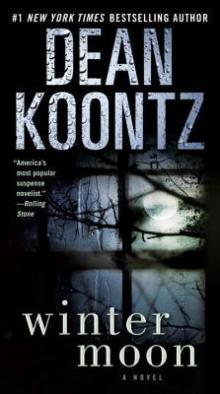 Winter Moon
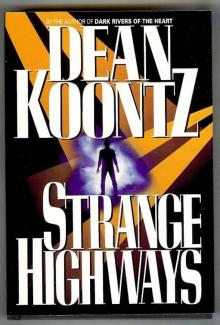 Strange Highways
 The Silent Corner
 Twilight Eyes
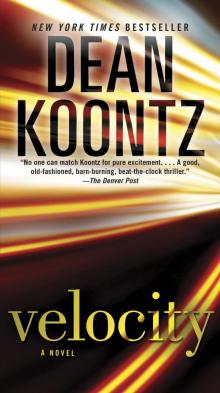 Velocity
 The Bad Place
 Cold Fire
 The Whispering Room
 Ricochet Joe
 The Crooked Staircase
 Tick Tock
 The Face
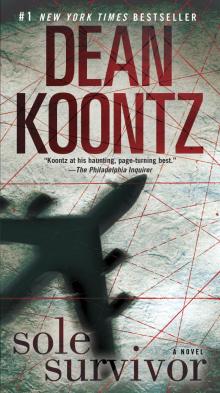 Sole Survivor
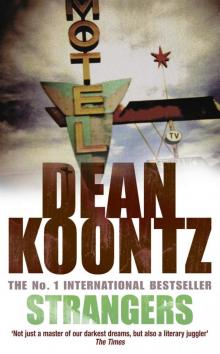 Strangers
 Deeply Odd
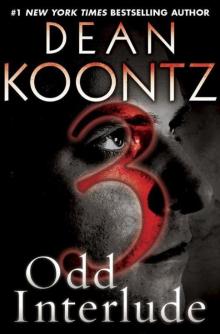 Odd Interlude #3
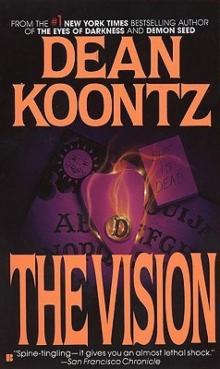 The Vision
 Phantoms
 Prodigal Son
 Odd Hours
 Last Light
 Fear Nothing
 Odd Interlude #1
 One Door Away From Heaven
 Koontz, Dean R. - Mr. Murder
 The City
 The Dead Town
 The Voice of the Night
 Dark Rivers of the Heart
 The Key to Midnight
 Lost Souls
 Odd Thomas: You Are Destined To Be Together Forever
 Odd Apocalypse
 Icebound
 The Book of Counted Sorrows
 The Neighbor
 Ashley Bell
 Santa's Twin
 Dead and Alive
 The Eyes of Darkness
 The Odd Thomas Series 4-Book Bundle
 Writing Popular Fiction
 City of Night f-2
 Dean Koontz's Frankenstein 4-Book Bundle
 What the Night Knows: A Novel
 Demon Child
 Starblood
 Surrounded mt-2
 Odd Interlude #3 (An Odd Thomas Story)
 Odd Interlude
 The Odd Thomas Series 7-Book Bundle
 The City: A Novel
 Deeply Odd ot-7
 Odd Interlude #1 (An Odd Thomas Story)
 The House of Thunder
 Odd Interlude ot-5
 Fear That Man
 Odd Is on Our Side
 Relentless
 A Big Little Life
 Hanging On
 The Forbidden Door
 Dragonfly
 The Moonlit Mind: A Tale of Suspense
 Final Hour (Novella)
 The Odd Thomas Series 4-Book Bundle: Odd Thomas, Forever Odd, Brother Odd, Odd Hours
 Odd Interlude (Complete)
 The Funhouse
 77 Shadow Street
 What the Night Knows
 Deeply Odd: An Odd Thomas Novel
 The Servants of Twilight
 Star quest
 Frankenstein Dead and Alive: A Novel
 Chase
Chase Eyes of Darkness
 The Moonlit Mind: A Tale of Suspense (Kindle Single)
 Sussurri
 The Moonlit Mind (Novella)
 Frankenstein: Lost Souls - A Novel
![Ricochet Joe [Kindle in Motion] (Kindle Single) Read online](http://i1.bookreadfree.com/i2/04/05/ricochet_joe_kindle_in_motion_kindle_single_preview.jpg) Ricochet Joe [Kindle in Motion] (Kindle Single)
Ricochet Joe [Kindle in Motion] (Kindle Single) Innocence: A Novel
 Beastchild
 A Darkness in My Soul
 Oddkins: A Fable for All Ages
 The Frankenstein Series 5-Book Bundle
 Frankenstein - City of Night
 Shadowfires
 Last Light (Novella)
 Frankenstein - Prodigal Son
 Ticktock
 Dance with the Devil
 You Are Destined to Be Together Forever (Short Story)
 The Moonlit Mind (Novella): A Tale of Suspense
 Darkness Under the Sun
 Dark Of The Woods
 Dean Koontz's Frankenstein
 Frankenstein
 The Face of Fear
 Children of the Storm
 Mr. Murder