
- Home
- Dean Koontz
Shadowfires Page 5
Shadowfires Read online
Page 5
“You’ve contacted the police?” Benny asked the medical examiner.
“Yes, we brought them into it as soon as we realized theft was the only remaining explanation. They’re downstairs right now, in the morgue, and of course they want to speak with you, Mrs. Leben.”
A soft rhythmic rasping noise was coming from Everett Kordell’s direction. Rachael opened her eyes. The medical examiner was nervously sliding his letter opener in and out of its protective sheath. Rachael closed her eyes again.
Benny said, “But are your security measures so inadequate that someone could waltz right in off the street and steal a corpse?”
“Certainly not,” Kordell said. “Nothing like this has happened before. I tell you, it’s inexplicable. Oh, yes, a determined person might be clever enough to find a way through our security, but it wouldn’t be an easy job. Not easy at all.”
“But not impossible,” Benny said.
The rasping noise stopped. From the new sounds that followed, Rachael figured that the medical examiner must be compulsively rearranging the silver-framed photographs on his desk.
She concentrated on that image to counteract the mad scenes that her darkly cunning imagination had conjured up for her horrified consideration.
Everett Kordell said, “I’d like to suggest that both of you accompany me to the morgue downstairs, so you can see firsthand exactly how tight our security is and how very difficult it would be to breach it. Mrs. Leben? Do you feel strong enough to take a tour of the facility?”
Rachael opened her eyes. Both Benny and Kordell were watching her with concern. She nodded.
“Are you sure?” Kordell asked, rising and coming out from behind his desk. “Please understand that I’m not insisting on it. But it would make me feel ever so much better if you would let me show you how careful we are, how responsibly we fulfill our duties here.”
“I’m okay,” she said.
Picking at a tiny piece of dark lint that he had just spotted on his sleeve, the medical examiner headed toward the door.
As Rachael got up from her chair and turned to follow Kordell, she was swept by a wave of dizziness. She swayed.
Benny took her arm, steadied her. “This tour isn’t necessary.”
“Yes,” she said grimly. “Yes, it is. I’ve got to see. I’ve got to know.”
Benny looked at her strangely, and she couldn’t meet his eyes. He knew something was wrong, something more than Eric’s death and disappearance, but he didn’t know what. He was unabashedly curious.
Rachael had intended to conceal her anxiety and keep him out of this hideous affair. But deceit was not one of her talents, and she knew he had been aware of her fear from the moment he’d stepped into her house. The dear man was both intrigued and concerned, staunchly determined to stay by her side, which was exactly what she didn’t want, but she couldn’t help that now. Later, she would have to find a way to get rid of Benny because, much as she needed him, it was not fair to drag him into this mess, not fair to put his life in jeopardy the way hers was.
Right now, however, she had to see where Eric’s battered corpse had lain, for she hoped a better understanding of the circumstances surrounding the body’s disappearance would allay her worst fears. She needed all her strength for the tour of the morgue.
They left the office and went down where the dead waited.
The broad, tile-floored, pale gray corridor ended at a heavy metal door. A white-uniformed attendant sat at a desk in an alcove to the right, this side of the door. When he saw Kordell approaching with Rachael and Benny, he got up and fished a set of bright jangling keys from the pocket of his uniform jacket.
“This is the only interior entrance to the morgue,” Kordell said. “The door is always locked. Isn’t that right, Walt?”
“Absolutely,” the attendant said. “You did want to go in, Dr. Kordell?”
“Yes.”
When Walt slid the key into the lock, Rachael saw a tiny spark of static electricity.
Kordell said, “There’s an attendant—Walt or someone else—on duty at this desk twenty-four hours a day, seven days a week. No one can get in without his assistance. And he keeps a registry of all visitors.”
The wide door was unlocked, and Walt was holding it open for them. They went inside, where the cool air smelled of antiseptics and of something unidentifiable that was less pungent and less clean. The door closed behind them with a faint creak of hinges that seemed to echo through Rachael’s bones. The lock engaged automatically with a hollow thunk.
Two sets of double doors, both open, led to big rooms on both sides of the morgue corridor. A fourth windowless metal portal, like that through which they had just entered, lay at the far end of the chilly hallway.
“Now please let me show you the only exterior entrance, where the morgue wagons and the morticians’ vehicles pull up,” Kordell said, leading the way toward the distant barrier.
Rachael followed him, though just being in this repository of the dead, where Eric had so recently lain, made her knees weak and broke her out in a sweat along the back of her neck and all over her scalp.
“Wait a second,” Benny said. He turned to the door through which they had come, pushed down on the bar handle, and opened it, startling Walt, who was just returning to his desk on the other side. Letting the heavy door fall shut again, Benny looked at Kordell and said, “Although it’s always locked from the outside, it’s always open from the inside?”
“That’s right, of course,” Kordell said. “It’d be too much trouble to have to summon the attendant to be let out as well as in. Besides, we can’t risk having someone accidentally locked in here during an emergency. Fire or earthquake, for example.”
Their footsteps echoed eerily off the highly polished tile floor as they continued along the corridor toward the exterior service door at the far end. When they passed the two large rooms, Rachael saw several people in the chamber on the left, standing and moving and talking softly in a glare of crisp, cold fluorescent light. Morgue workers wearing hospital whites. A fat man in beige slacks and a beige-yellow-red-green madras sports jacket. Two men in dark suits looked up as Rachael walked by.
She also saw three dead bodies: still, shrouded shapes lying on stainless-steel gurneys.
At the end of the hall, Everett Kordell pushed open the wide metal door. He stepped outside and beckoned them.
Rachael and Benny followed. She expected to find an alleyway beyond, but though they had left the building, they were not actually outside. The exterior morgue door opened onto one of the underground levels of an adjacent multistory parking garage. It was the same garage in which she’d parked her 560 SL just a short while ago, though she’d left it a few levels above this one.
The gray concrete floor, the blank walls, and the thick pillars holding up the gray concrete ceiling made the subterranean garage seem like an immense, starkly modernistic, Western version of a pharaoh’s tomb. The sodium-vapor ceiling lights, widely spaced, provided a jaundice-yellow illumination that Rachael found fitting for a place that served as an antechamber to the hall of the dead.
The area around the morgue entrance was a no-parking zone. But a score of cars were scattered farther out in the vast room, half in the crepuscular bile-yellow light and half in purple-black shadows that had the velvet texture of a casket lining.
Looking at the cars, she had the extraordinary feeling that something was hiding among them, watching.
Watching her in particular.
Benny saw her shiver, and he put his arm around her shoulders.
Everett Kordell closed the heavy morgue door, then tried to open it, but the bar handle could not be depressed. “You see? It locks automatically. Ambulances, morgue wagons, and hearses drive down that ramp from the street and stop here. The only way to get in is to push this button.” He pushed a white button in the wall beside the door. “And speak into this intercom.” He brought his mouth close to a wire speaker set flush in the concrete. “Walt? This
is Dr. Kordell at the outer door. Will you buzz us back in, please?”
Walt’s voice came from the speaker. “Right away, sir.”
A buzzer sounded, and Kordell was able to open the door again.
“I assume the attendant doesn’t just open for anyone who asks to be let in,” Benny said.
“Of course not,” Kordell said, standing in the open doorway. “If he’s sure he recognizes the voice and if he knows the person, he buzzes him through. If he doesn’t recognize the voice, or if it’s someone new from a private mortuary, or if there’s any reason to be suspicious, the attendant walks through the corridor that we just walked, all the way from the front desk, and he inspects whoever’s seeking admittance.”
Rachael had lost all interest in these details and was concerned only about the gloom-mantled garage around them, which provided a hundred excellent hiding places.
Benny said, “At that point the attendant, not expecting violence, could be overpowered, and the intruder could force his way inside.”
“Possibly,” Kordell said, his thin face drawing into a sharp scowl. “But that’s never happened.”
“The attendants on duty today swear that they logged in everyone who came and went—and allowed only authorized personnel to enter?”
“They swear,” Kordell said.
“And you trust them all?”
“Implicitly. Everyone who works here is aware that the bodies in our custody are the remains of other people’s loved ones, and we know we have a solemn—even sacred—responsibility to protect those remains while we’re in charge of them. I think that’s evident in the security arrangements I’ve just shown you.”
“Then,” Benny said, “someone either had to pick the lock—”
“It’s virtually unpickable.”
“Or someone slipped into the morgue while the outer door was open for legitimate visitors, hid out, waited until he was the only living person inside, then spirited Dr. Leben’s body away.”
“Evidently yes. But it’s so unlikely that—”
Rachael said, “Could we go back inside, please?”
“Certainly,” Kordell said at once, eager to please. He stepped out of her way.
She returned to the morgue corridor, where the cold air carried a faint foul smell beneath the heavy scent of pine disinfectant.
5
UNANSWERED QUESTIONS
In the holding room where the cadavers awaited autopsy, the air was even colder than in the morgue’s corridor. Glimmering strangely in all metal surfaces, the stark fluorescent light imparted a wintry sheen to the stainless-steel gurneys and to the bright stainless-steel handles and hinges on the cabinets along the walls. The glossy white enamel finish of the chests and cabinets, though surely no thicker than an eighth of an inch, had a curiously deep—even bottomless—appearance similar to the mysterious, lustrous depth of a landscape of moon-washed snow.
She tried not to look at the shrouded bodies and refused to think about what might lie in some of the enormous cabinet drawers.
The fat man in the madras jacket was Ronald Tescanet, an attorney representing the city’s interests. He had been called away from dinner to be on hand when Rachael spoke with the police and, afterward, to discuss the disappearance of her husband’s body. His voice was too mellifluous, almost greasy, and he was so effusively sympathetic that his condolences poured forth like warm oil from a bottle. While the police questioned Rachael, Tescanet paced in silence behind them, frequently smoothing his thick black hair with his plump white hands, each of which was brightened by two gold and diamond rings.
As she had suspected, the two men in dark suits were plainclothes police. They showed Rachael their ID cards and badges. Refreshingly, they did not burden her with unctuous sympathy.
The younger of the two, beetle-browed and burly, was Detective Hagerstrom. He said nothing at all, leaving the questioning entirely to his partner. He stood unmoving, like a rooted oak, in contrast to the attorney’s ceaseless roaming. He watched with small brown eyes that gave Rachael the impression of stupidity at first; but after a while, on reconsideration, she realized that he possessed a higher than average intelligence which he kept carefully veiled.
She worried that somehow Hagerstrom, by virtue of a cop’s almost magical sixth sense, would pierce her deception and see the knowledge that she was concealing. As inconspicuously as possible, she avoided meeting his gaze.
The older cop, Detective Julio Verdad, was a small man whose complexion was the shade of cinnamon and whose black eyes had a vague trace of purple like the skins of ripe plums. He was a sharp dresser: a well-tailored blue suit, dark but summerweight; a white shirt that might have been silk, with French cuffs held together by gold and pearl cuff links; a burgundy necktie with a gold tie chain instead of a clip or tack; dark burgundy Bally loafers.
Although Verdad spoke in clipped sentences and was almost curt, his voice was unfailingly quiet and gentle. The contrast between his lulling tone and his brisk manner was disconcerting. “You’ve seen their security, Mrs. Leben.”
“Yes.”
“And are satisfied?”
“I suppose.”
To Benny, Verdad said, “You are?”
“Ben Shadway. An old friend of Mrs. Leben’s.”
“Old school friend?”
“No.”
“A friend from work?”
“No. Just a friend.”
The plum-dark eyes gleamed. “I see.” To Rachael, Verdad said, “I have a few questions.”
“About what?”
Instead of answering at once, Verdad said, “Like to sit down, Mrs. Leben?”
Everett Kordell said, “Yes, of course, a chair,” and both he and the fat attorney, Ronald Tescanet, hurried to draw one away from a corner desk.
Seeing that no one else intended to sit, concerned about being placed in a position of inferiority with the others peering down at her, Rachael said, “No, thank you. I’ll stand. I can’t see why this should take very long. I’m certainly in no mood to linger here. What is it you want to ask me, anyway?”
Verdad said, “An unusual crime.”
“Body snatching,” she said, pretending to be both baffled and sickened by what had happened. The first emotion had to be feigned; the second was more or less genuine.
“Who might have done it?” Verdad asked.
“I’ve no idea.”
“You know no one with a reason?”
“Someone with a motive for stealing Eric’s body? No, of course not,” she said.
“He had enemies?”
“In addition to being a genius in his field, he was a successful businessman. Geniuses often unwittingly arouse jealousy on the part of colleagues. And, inevitably, some people envied his wealth. And some felt he’d … wronged them on his climb up the ladder.”
“Had he wronged people?”
“Yes. A few. He was a driven man. But I strongly doubt that any of his enemies are the type to take satisfaction from a revenge as pointless and macabre as this.”
“He was not just driven,” Verdad said.
“Oh?”
“He was ruthless.”
“Why do you say that?”
“I’ve read about him,” Verdad said. “Ruthless.”
“All right, yes, perhaps. And difficult. I won’t deny it.”
“Ruthlessness makes passionate enemies.”
“You mean so passionate that body snatching would make sense?”
“Perhaps. I’ll need the names of his enemies, people who might have reason to hold a grudge.”
“You can get that information from the people he worked with at Geneplan,” she said.
“His company? But you’re his wife.”
“I knew very little about his business. He didn’t want me to know. He had very strong opinions about … my proper place. Besides, for the past year I’ve been separated from him.”
Verdad looked surprised, but somehow Rachael sensed that he had already done some b
ackground work and knew what she was telling him.
“Divorcing?” he asked.
“Yes.”
“Bitter?”
“On his part, yes.”
“So this explains it.”
“Explains what?” she asked.
“Your utter lack of grief.”
She had begun to suspect that Verdad was twice as dangerous as the silent, motionless, watchful Hagerstrom. Now she was sure of it.
“Dr. Leben treated her abominably,” Benny said in her defense.
“I see,” Verdad said.
“She had no reason to grieve for him,” Benny said.
“I see.”
Benny said, “You’re acting as if this is a murder case, for God’s sake.”
“Am I?” Verdad said.
“You’re treating her as if she’s a suspect.”
“Do you think so?” Verdad asked quietly.
“Dr. Leben was killed in a freak accident,” Benny said, “and if anyone was at fault, it was Leben himself.”
“So we understand.”
“There were at least a dozen witnesses.”
“Are you Mrs. Leben’s attorney?” Verdad inquired.
“No, I told you—”
“Yes, the old friend,” Verdad said, making his point subtly.
“If you were an attorney, Mr. Shadway,” Ronald Tescanet said, stepping forward so quickly that his jowls trembled, “you’d understand why the police have no choice but to pursue this unpleasant line of questioning. They must, of course, consider the possibility that Dr. Leben’s body was stolen to prevent an autopsy. To hide something.”
“How melodramatic,” Benny said scornfully.
“But conceivable. Which would mean that his death was not as cut-and-dried as it appeared to be,” Tescanet said.
“Exactly,” Verdad said.
“Nonsense,” Benny said.
Rachael appreciated Benny’s determination to protect her honor. He was unfailingly sweet and supportive. But she was willing to let Verdad and Hagerstrom regard her as a possible murderess or at least an accomplice to murder. She was incapable of killing anyone, and Eric’s death was entirely accidental, and in time that would be clear to the most suspicious homicide detective. But while Hagerstrom and Verdad were busy satisfying themselves on those points, they would not be free to pursue other avenues of inquiry closer to the terrible truth. They were in the process of dragging their own red herring across the trail, and she would not take offense at their misdirected suspicion as long as it kept them baying after the wrong scent.
 Breathless
 Lightning
 The Taking
 The Door to December
 Odd Thomas
 Midnight
 Whispers
 Odd Interlude #2
 The Mask
 Watchers
 By the Light of the Moon
 Night Chills
 Brother Odd
 False Memory
 The Darkest Evening of the Year
 Life Expectancy
 The Good Guy
 Hideaway
 Innocence
 Your Heart Belongs to Me
 Forever Odd
 Intensity
 Saint Odd
 Dragon Tears
 The Husband
 Final Hour
 Demon Seed
 City of Night
 From the Corner of His Eye
 A Big Little Life: A Memoir of a Joyful Dog
 Seize the Night
 Winter Moon
 Strange Highways
 The Silent Corner
 Twilight Eyes
 Velocity
 The Bad Place
 Cold Fire
 The Whispering Room
 Ricochet Joe
 The Crooked Staircase
 Tick Tock
 The Face
 Sole Survivor
 Strangers
 Deeply Odd
 Odd Interlude #3
 The Vision
 Phantoms
 Prodigal Son
 Odd Hours
 Last Light
 Fear Nothing
 Odd Interlude #1
 One Door Away From Heaven
 Koontz, Dean R. - Mr. Murder
 The City
 The Dead Town
 The Voice of the Night
 Dark Rivers of the Heart
 The Key to Midnight
 Lost Souls
 Odd Thomas: You Are Destined To Be Together Forever
 Odd Apocalypse
 Icebound
 The Book of Counted Sorrows
 The Neighbor
 Ashley Bell
 Santa's Twin
 Dead and Alive
 The Eyes of Darkness
 The Odd Thomas Series 4-Book Bundle
 Writing Popular Fiction
 City of Night f-2
 Dean Koontz's Frankenstein 4-Book Bundle
 What the Night Knows: A Novel
 Demon Child
 Starblood
 Surrounded mt-2
 Odd Interlude #3 (An Odd Thomas Story)
 Odd Interlude
 The Odd Thomas Series 7-Book Bundle
 The City: A Novel
 Deeply Odd ot-7
 Odd Interlude #1 (An Odd Thomas Story)
 The House of Thunder
 Odd Interlude ot-5
 Fear That Man
 Odd Is on Our Side
 Relentless
 A Big Little Life
 Hanging On
 The Forbidden Door
 Dragonfly
 The Moonlit Mind: A Tale of Suspense
 Final Hour (Novella)
 The Odd Thomas Series 4-Book Bundle: Odd Thomas, Forever Odd, Brother Odd, Odd Hours
 Odd Interlude (Complete)
 The Funhouse
 77 Shadow Street
 What the Night Knows
 Deeply Odd: An Odd Thomas Novel
 The Servants of Twilight
 Star quest
 Frankenstein Dead and Alive: A Novel
 Chase
Chase Eyes of Darkness
 The Moonlit Mind: A Tale of Suspense (Kindle Single)
 Sussurri
 The Moonlit Mind (Novella)
 Frankenstein: Lost Souls - A Novel
![Ricochet Joe [Kindle in Motion] (Kindle Single) Read online](http://i1.bookreadfree.com/i2/04/05/ricochet_joe_kindle_in_motion_kindle_single_preview.jpg) Ricochet Joe [Kindle in Motion] (Kindle Single)
Ricochet Joe [Kindle in Motion] (Kindle Single) Innocence: A Novel
 Beastchild
 A Darkness in My Soul
 Oddkins: A Fable for All Ages
 The Frankenstein Series 5-Book Bundle
 Frankenstein - City of Night
 Shadowfires
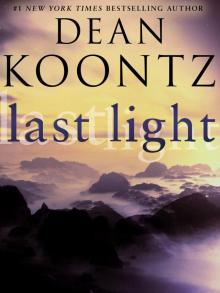 Last Light (Novella)
 Frankenstein - Prodigal Son
 Ticktock
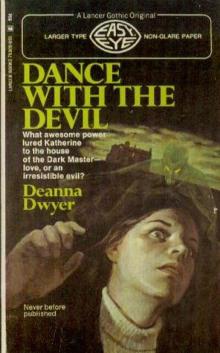 Dance with the Devil
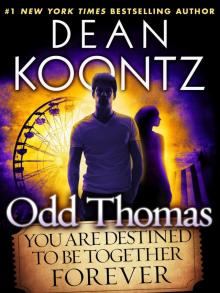 You Are Destined to Be Together Forever (Short Story)
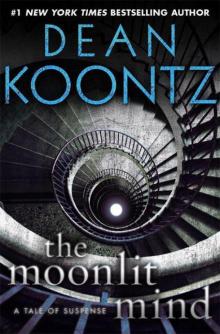 The Moonlit Mind (Novella): A Tale of Suspense
 Darkness Under the Sun
 Dark Of The Woods
 Dean Koontz's Frankenstein
 Frankenstein
 The Face of Fear
 Children of the Storm
 Mr. Murder